
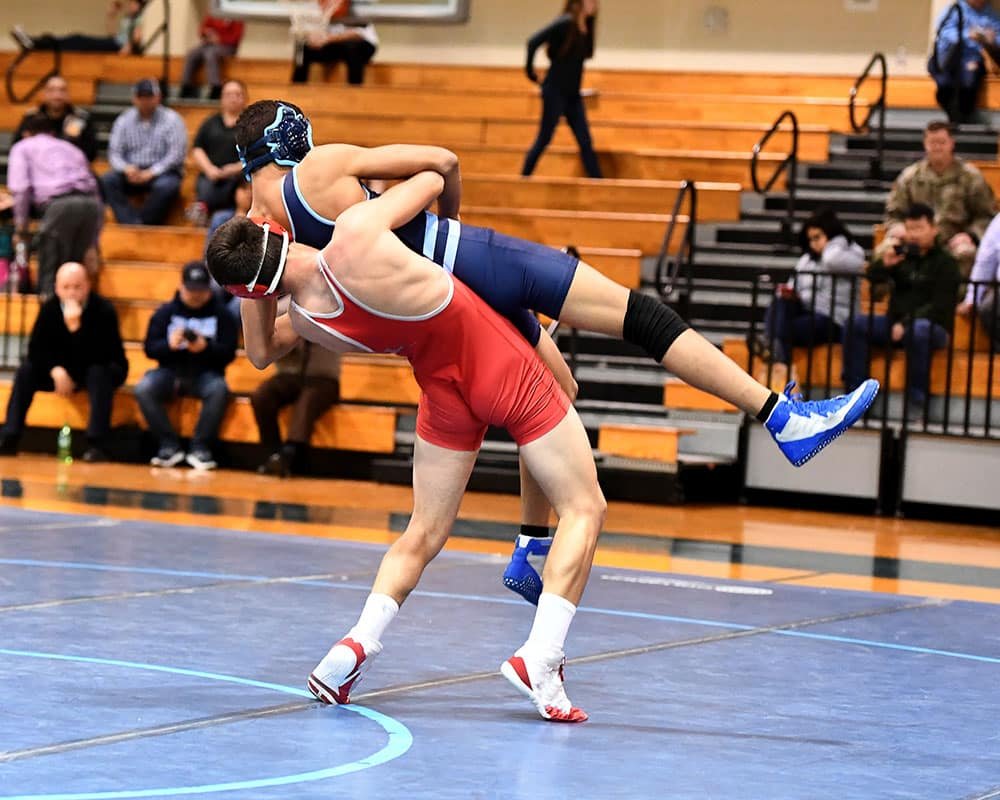
Starting college wrestling can feel overwhelming, but the proper drills make all the difference. College wrestling is an intense endeavor with high-level competition. A strong sense of confidence is required to survive in the college wrestling environment. This confidence can be built by mastering the fundamentals using appropriate drills. Structured wrestling drills help beginners sharpen their skills step by step. These drills improve decision-making by helping you pick the right moves at the right time. Consistency makes them part of muscle memory, and performance on the mat improves. Structured drills improve agility and endurance and build a solid physical base.
Stance is the base of every wrestling skill. A proper stance helps you gain control on the mat and protects you from your opponent’s sudden attack. It also enables you to smoothly transition from one move to the next. Beginners should keep their stance low and practice forward, backward, and side-to-side movements. Attempt drills with steady hands and legs, ready to attack or defend any time.
Penetration step is the step taken towards the opponent for a takedown. It is the driving force behind most takedowns. It includes effective body positioning leading to accurate takedowns. Use a partner in drills to practice the penetration step. Practice position changes, knee bends, and hip movements.
The penetration step is a vital skill that can create space for you to finish your opponent. Adjust the knee bending according to your height. Mark the perfect spot where the leading foot should land and practice it regularly. It is recommended that beginners perform 3 or 4 sets of drills with 8-10 reps per set.
Sprawl is a vital defensive technique in wrestling. Beginners should master it quickly to perform well on the mat. It can prevent an opponent’s takedown and put you in an attacking position. Sprawling drills improve reaction time and hip strength, leading to a solid takedown defense. It disrupts the opponent’s confidence.
It is best to practice sprawls with a partner to get real-time experience. Try to extend your legs as you fully drop onto your hips. Your knees shouldn’t touch the floor, and you should put the pressure of your head and chest on the opponent’s shoulder and back.
Transitioning a takedown into a finish is a drill to finish matches. Focus on the finish once you have mastered the penetration step and takedowns. It includes attacking the opponent, gaining control, and finishing him for valuable points. Beginners must do drills to reach the advanced level of finish tactics.
Start with single-leg and double-leg takedowns with less resistance from the partner. Increase the resistance level to allow the training partner to do the sprawls. It will create a live-action environment, like in tournaments. Try timed finishes of 8-10 seconds in more advanced drills to improve decision-making on the mat. Do 4-5 sets daily, gradually increasing your partner’s resistance.
Stand-up is a wrestling escape technique. It gives confidence to the beginners. They feel in control when they can recover from a weak position on the mat. It provides a strong base, body balance, and solid hand and head control. Start the drill with the partner in control. Explode up with the hips and build a strong base with the legs. Fight with hands for control while keeping the head and chest high. Stand up and turn to your opponent’s face to escape. Rely primarily on lower-body strength and practice with quick stand-ups.
Gripping drills build upper-body strength and improve toughness. They involve taking control early and setting up bigger attacks and takedowns. Intense hand fighting displays your dominance and wears down the opponent both physically and mentally. Beginners must do handfighting, collar-ties, and gripping drills with a partner. Master minor pulls and snaps with wrist-control drills. Use resistant bands to increase strength in hands and wrists.
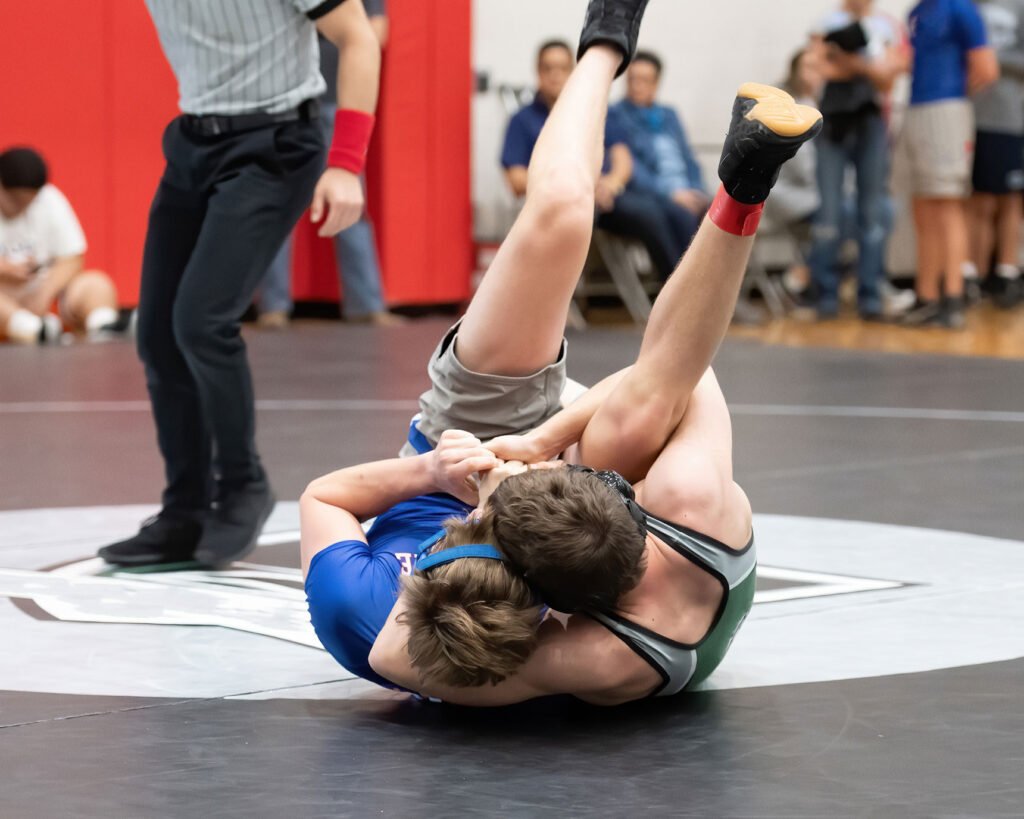
The hip heist improves agility and quick reversals. Sit on the mat, lift your hips, and rotate from side to side. Keep your movements smooth and controlled. This drill builds balance and speed and helps you escape tough positions easily.
Chain wrestling is very significant and makes you a beast on the mat. It is all about linking one move to another and being one step ahead of your opponent every time. Chain wrestling drills improve your instinctive abilities to capitalize on your opponent’s mistakes. Try repeating sequences and increasing speed each time.
Aim to attack without pauses and make the most of each move to score valuable points. Chain wrestling uses all the above-mentioned skills. Start with a solid stance and penetration step, grip well, and land takedowns and other moves one after another. The key is to not let your opponent have any space to relax.
The conditioning circuit develops mental strength and stamina, helping you thrive through the matches’ challenging moments. Conditioning drills include deep breathing, sparring, jumping, push-ups, pull-ups, and squats. Remember to rest in between for proper recovery.
Situational drills prepare you for unexpected moments in a match. Coordinate with your coach and teammates, and make scenarios you could face in a game. Try coping with different challenging situations. It will help you make smart decisions and score quick points.
Mastering the fundamentals is the top priority for beginners in college wrestling. Accuracy on the mat depends on stance, gripping, sprawling, takedowns, stand-ups, and finishing abilities. Consistently working on all these skills helps beginners to survive in a challenging college wrestling environment. Repetitions help sharpen muscle memory, and reactions become automatic in matches.
Beginners can start with 4-5 drills a week. They should do sessions using mixed techniques like conditioning, gripping, and stand-ups. Qualitative sessions are better in quantity. Hence, they should concentrate and make the best of every drill.
Yes, practice can be started solo. However, a partner is required for advanced drills.
Headgear, a singlet, a mouthguard, and shoes are needed for wrestling drills. Take good care of the gear and watch for repairs or replacements.
With disciplined training drills, improvement is visible within a month. The basics take less time, but the advanced training requires more time and effort.
Yes, off-season drills provide opportunities to learn new techniques and sharpen those already mastered. There is not much pressure, and improvement can be made at a decent pace.